

By the early 1940s, women’s softball had become one of the most popular amateur sports in North America. Industrial leagues, company teams, and city competitions filled parks across the United States and Canada, and tens of thousands of teams were active across the continent. Yet while opportunities to play softball were widespread, avenues for girls and women to learn baseball remained extremely limited.
The All-American Girls Professional Baseball League therefore faced a unique challenge when it debuted in 1943. Originally organized as the All-American Girls Softball League, the circuit soon became known as the All-American Girls Baseball League as its rules moved closer to the traditional game before later adopting the name All-American Girls Professional Baseball League. Its players initially competed under modified softball rules, and over the next twelve seasons the game gradually evolved, first into a hybrid of softball and baseball, and eventually into full baseball.
As these changes took place, league officials recognized the need to develop a pipeline of players capable of playing the increasingly baseball-like game. The AAGPBL decided to create development programs and also conducted extensive scouting and tryout camps across the United States and Canada, evaluating hundreds of players each year from the country’s vast network of women’s softball teams to determine who could successfully transition to baseball.
One of the earliest ways the league attempted to cultivate new players was through junior programs designed to teach girls the fundamentals of baseball. In several cities, young players learned throwing, fielding, and hitting with a baseball rather than the larger softball many had grown up playing.
One such program was the Junior Daisies in Fort Wayne, a youth league connected to the Fort Wayne Daisies that operated from 1946 to 1963, outlasting the All-American Girls Professional Baseball League itself. The program gave local girls an opportunity to learn the game while also helping promote women’s professional baseball in the community.
Another important component of the league’s developmental system was the use of traveling teams such as the Chicago Colleens and the Springfield Sallies.
Following the 1948 season, when both clubs finished near the bottom of the standings in the All-American Girls Professional Baseball League, officials reorganized them as traveling teams. At the same time, the circuit had more rookie players than available roster spots, and many were assigned to the tours. The Chicago Colleens and Springfield Sallies effectively functioned as a traveling rookie league, allowing young players to gain experience while helping promote the sport.
These teams toured extensively, sometimes traveling thousands of miles and playing exhibition games against men’s amateur and semi-professional teams, local women’s clubs, and all-star squads. In addition to providing development opportunities for young players, the tours also introduced women’s professional baseball to communities that did not yet have an AAGPBL franchise.
Many of the players involved in these development programs were teenagers or very young adults who were still learning the fundamentals of baseball.
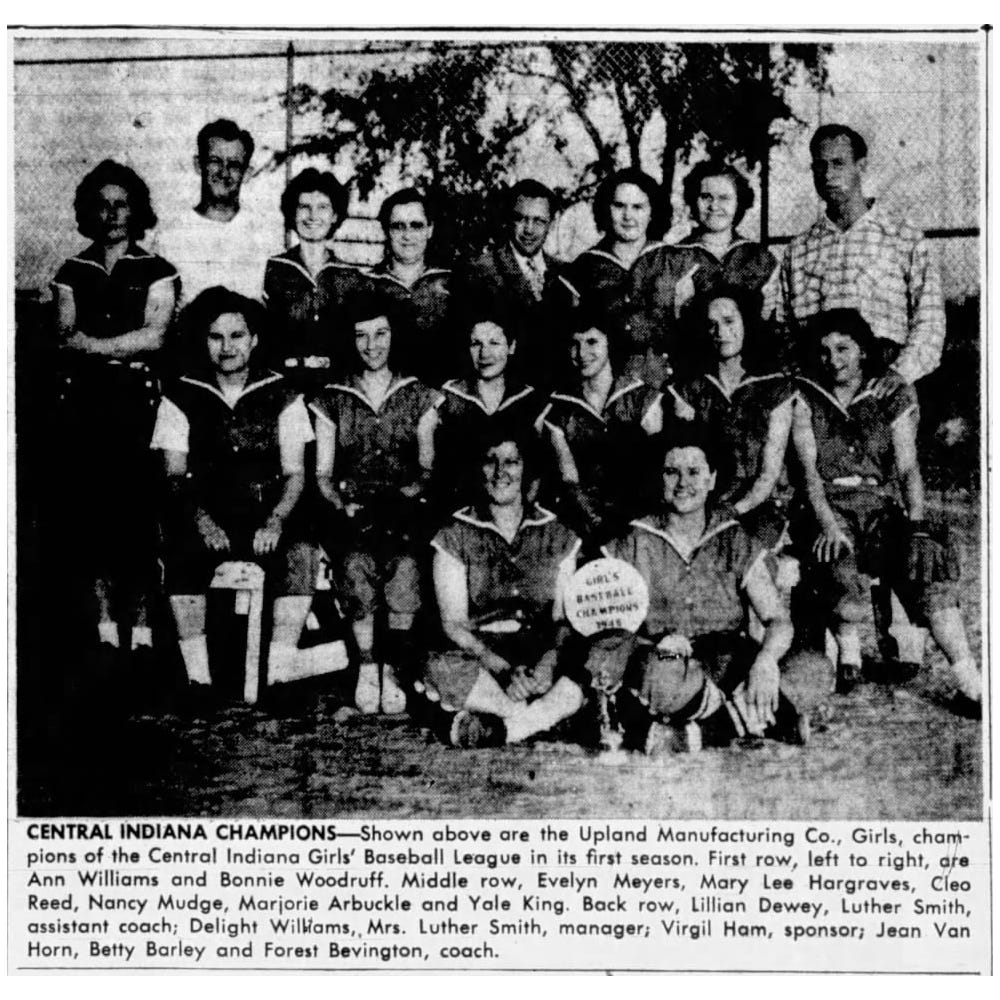
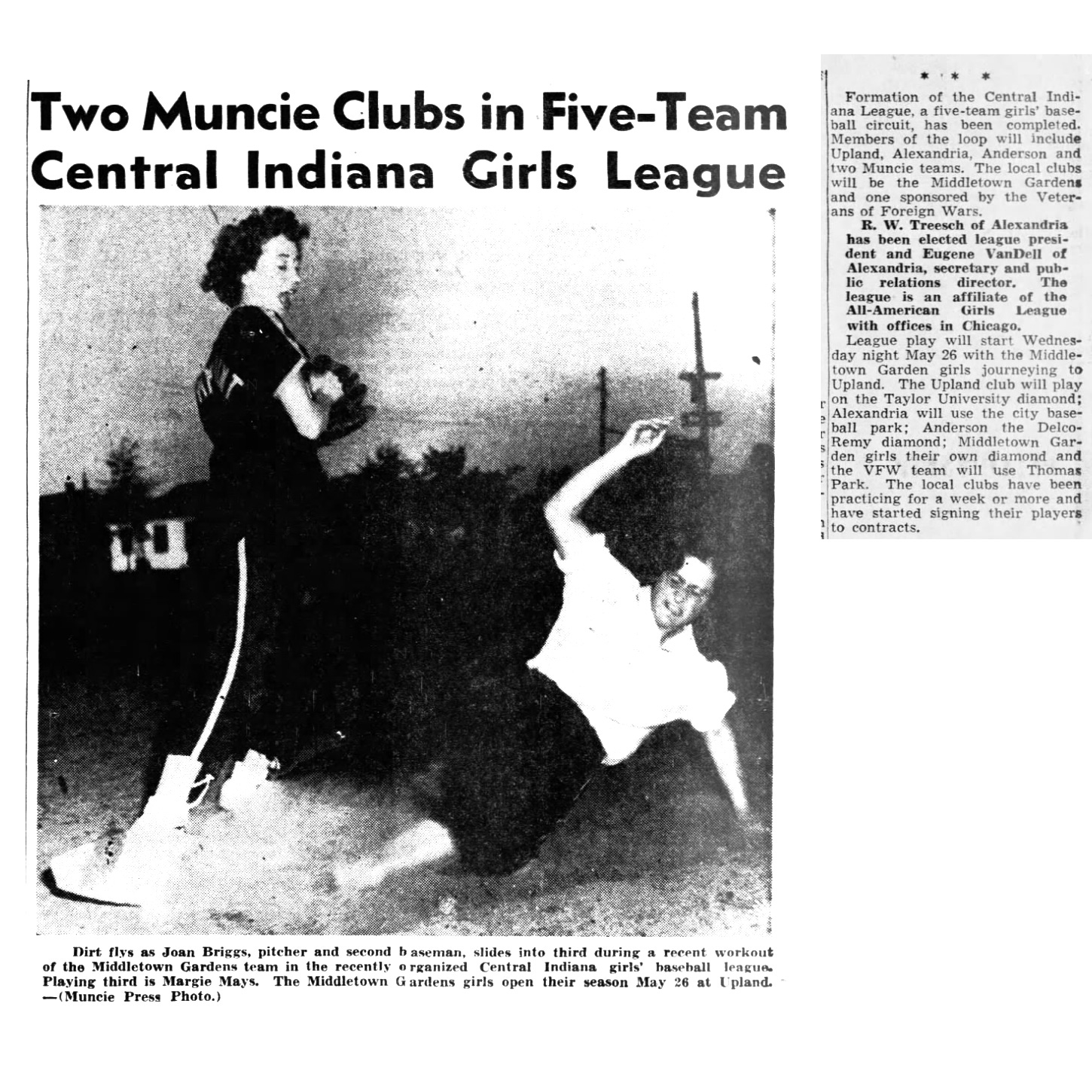
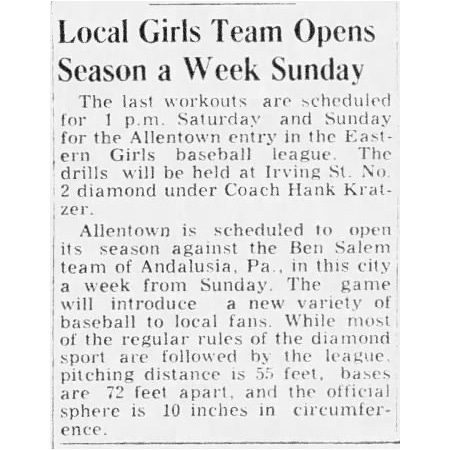
Several additional developmental leagues also emerged as part of this effort. These included the Chicago Girls Baseball League (1948–1950), the Central Indiana Girls’ Baseball League (1948–1949), and the Eastern Girls’ Baseball League, a circuit based in Pennsylvania that played a single season in 1950.
The presence of AAGPBL franchises such as the South Bend Blue Sox and the Fort Wayne Daisies in the state made Indiana a natural location for a developmental circuit. The Central Indiana Girls’ Baseball League included teams such as the Alexandria Smart Alecks, Anderson Squaws, Middletown Gardens (Muncie) Cardinals, Muncie VFW Jinx, and the Upland Manufacturing Company Highlanders.
Further east, the Eastern Girls’ Baseball League briefly brought organized girls’ baseball to Pennsylvania in 1950. Its clubs included the Norristown Nifties, Perkiomen Demons, Ben Salem of Andalusia, Sellersville-Perkasie, and the Allentown Chicks.
While the Chicago league was organized and operated directly by the All-American Girls Professional Baseball League, the Indiana and Eastern leagues reflected a different approach. Rather than creating entirely new teams, these circuits were largely composed of existing softball clubs that had been converted to baseball, part of the league’s broader effort to transform the country’s large base of women’s softball players into baseball players.
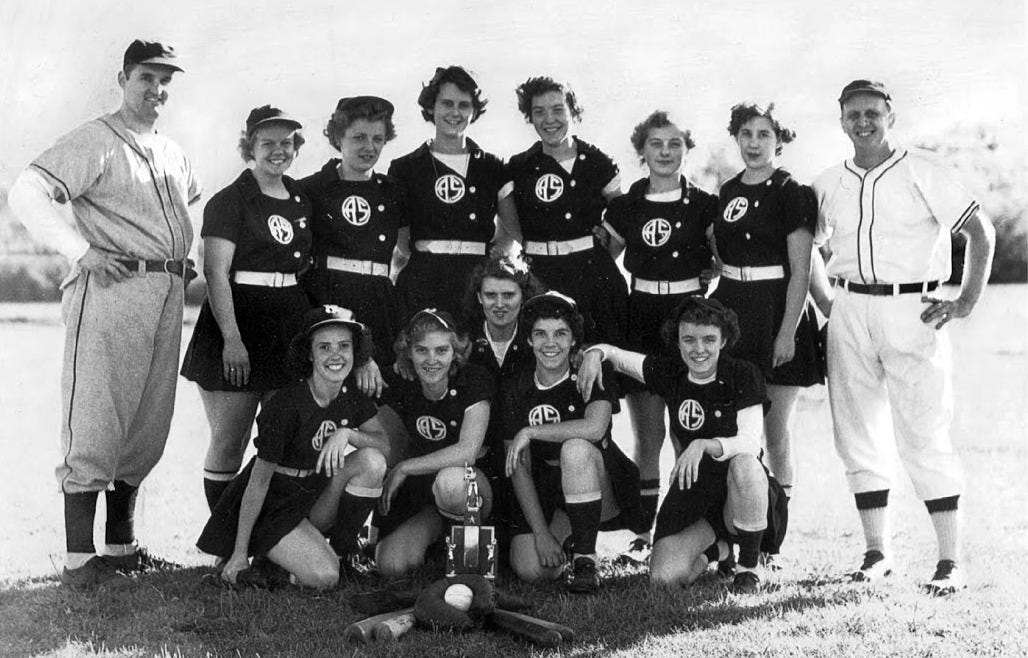
Among these efforts, the Chicago Girls Baseball League represented the most direct attempt by the All-American Girls Professional Baseball League to create a structured farm system for women’s professional baseball. Established in 1948, the league operated in the Chicago area under the supervision of AAGPBL officials.
Many of its games were played at North Town Currency / Thillens Stadium, located at Devon and Kedzie in Chicago’s Lincolnwood neighborhood, as well as at Blue Island Stadium in Blue Island, Illinois. Thillens Stadium was one of Chicago’s best-known amateur baseball venues and frequently hosted high-level industrial league and semi-professional games.
The league’s teams were closely tied to their sponsors. Mel Thillens, owner of Thillens Stadium on Chicago’s North Side, sponsored two teams: the Northtown Co-eds and the Northtown Debs. The Blue Island Recreation Commission sponsored two additional teams, the Blue Island Dianas and the Blue Island Stars. In 1949, Rayson’s Sports took over sponsorship of the Northtown Co-eds.
Its location was significant. Chicago had long been one of the strongest centers of women’s softball in the United States, with numerous industrial and company teams competing throughout the city and surrounding suburbs. The city’s thriving industrial softball leagues—many sponsored by major companies and factory teams—produced a large pool of experienced athletes, providing fertile ground for the AAGPBL’s efforts to convert softball players into baseball players.
Teams played under baseball rules and wore the same style of skirted uniforms used by AAGPBL clubs, reinforcing the connection between the two levels of play. This visual similarity was intentional, helping familiarize young players with the appearance and expectations of the professional league.
A number of players who participated in these developmental efforts—including those in the Chicago Girls Baseball League and the touring teams—would eventually earn opportunities to compete at the professional level in the AAGPBL.
The Chicago Girls Baseball League operated for three seasons before concluding after the 1950 campaign. Its disappearance reflected broader changes within the AAGPBL, which in the early 1950s increasingly relied on scouting and tryout camps rather than maintaining formal developmental leagues.
Although many of these programs and leagues existed only briefly, they represented one of the earliest organized attempts to build a developmental system for women’s baseball in the United States. In doing so, the AAGPBL helped teach an entire generation of women how to play baseball at a time when few such opportunities existed.