

With the St. Louis Gateway Gold hoping to join the Professional Softball League for the 2027 season, now is the perfect time to look back at St. Louis’ rich softball history. Long before today’s efforts to bring professional softball to the Gateway to the West, the city was home to the American Soft Ball Association (ASBA), a pioneering national governing body that helped shape the sport during the 1930s and 1940s. Although often overshadowed by the better-known Amateur Softball Association (ASA), the ASBA played an important role in the growth of women’s softball and helped establish the city as one of the game’s early centers.
The ASBA was formed in August 1933, predating the Chicago World’s Fair Softball Tournament by about a month and the formation of the ASA by several months. The organization built North Side Park at Grand Boulevard and Florissant Avenue, with opening night held on Saturday, August 19, 1933. Play began at 7:30 p.m. with a doubleheader featuring the Bachelor Girls taking on Haupt’s Brick Contractors in the women’s game, followed by McQuay-Norris facing the Wabash Banner Blues in the men’s game. Former Major League first baseman and St. Louis Browns star George Sisler made his debut as head of the organization on opening night.
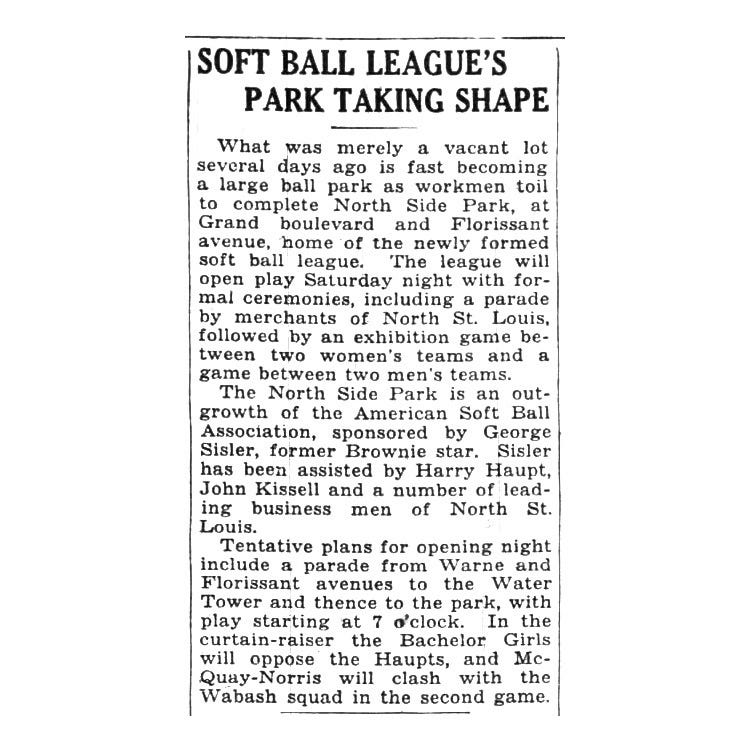
The inaugural ASBA season lasted just over a month, but it quickly proved there was an appetite for high-level softball in St. Louis. Fans packed North Side Park to watch both the men’s and women’s games, helping the fledgling organization draw record crowds. In just a few weeks, the ASBA had established itself as one of the city’s premier summer attractions. The Bachelor Girls captured the inaugural women’s championship by defeating Haupt’s Brick Contractors for the title in September.
The following season, the ASBA added four more ballparks across St. Louis, with each park operating its own league. The Bachelor Girls, now known as the Whiteway Cleaners, finished with the best record among all women’s teams and were recognized as the city champions.
In 1935, the championship tournament expanded to include teams from across the United States, transforming it from a local competition into a national tournament. What had begun as a metropolitan St. Louis organization had quickly grown into a national destination for women’s softball, attracting top teams from across the country and further cementing the city’s reputation as one of the sport’s early strongholds. Out-of-town teams were paid $25 per day (up to a maximum of $100) during tournament play, while the championship winners received a trophy donated by the St. Louis Globe-Democrat. The Mordie Wolf team captured the 1935 women’s title by defeating the Whiteway Cleaners, ending their bid for a third consecutive crown. The success and scale of the 1935 tournament helped elevate the ASBA’s standing and establish it among the nation’s leading women’s softball organizations.
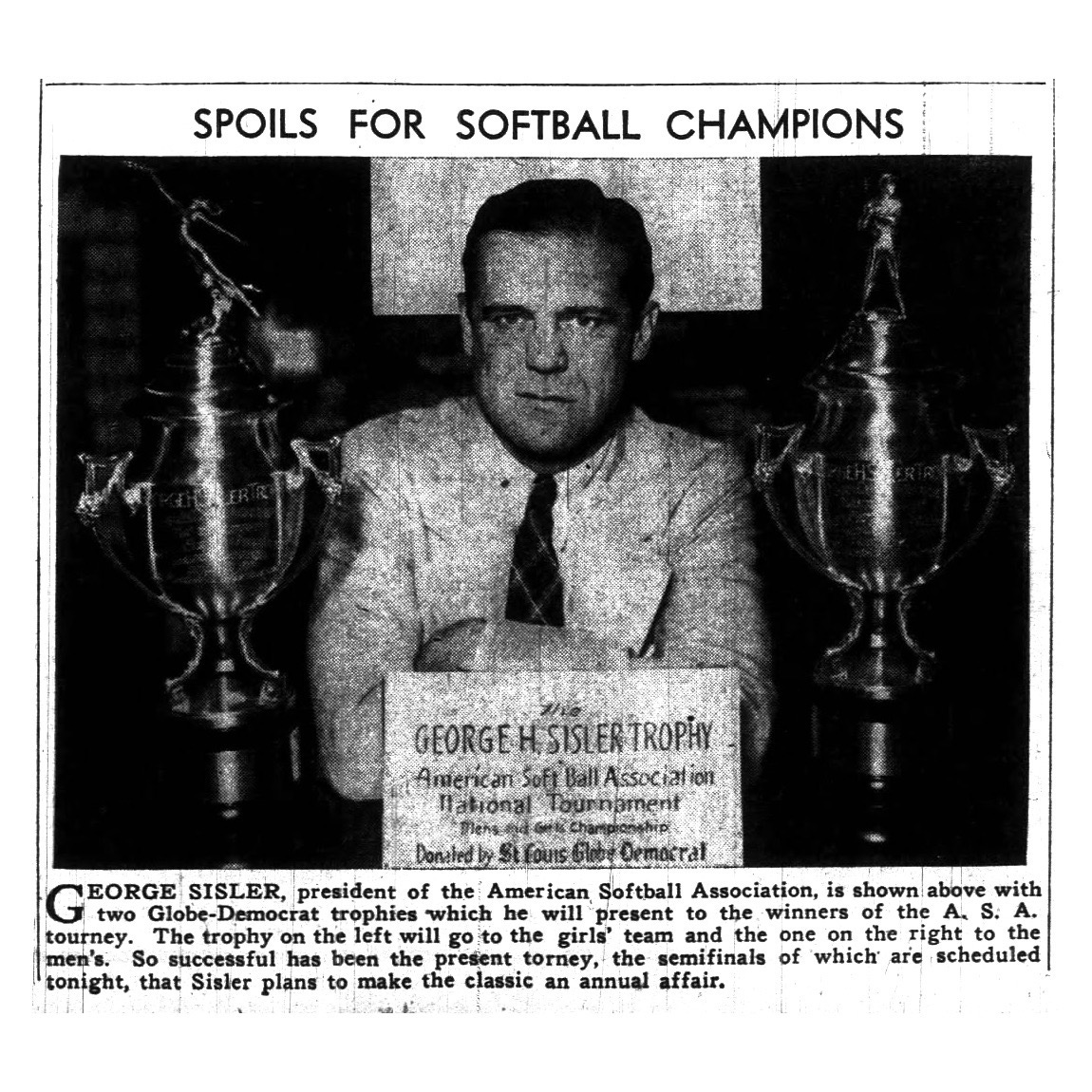
In 1937, the ASBA announced an affiliation with the ASA, allowing teams in the American to compete in ASA tournaments and vice versa. The relationship quickly deteriorated. In August 1939, the ASA suspended three ASBA teams—one women’s team and two men’s teams—for playing against “unsanctioned” clubs. ASA President M.J. Pauley also announced that any team competing against the suspended clubs would likewise face suspension.
George Sisler responded by ending the ASBA’s agreement with the ASA, but the dispute did not end there. In October, Pauley announced the suspension of all 44 men’s and women’s softball teams in the St. Louis area. He also persuaded the Amateur Athletic Union (AAU), the governing body for numerous amateur and Olympic sports in the United States, to suspend the ASBA and prohibit its athletes from participating in any other amateur sport under AAU jurisdiction.
The conflict was temporarily resolved in December when the two organizations reached an agreement settling their differences. However, in August 1940, the ASA once again banned the ASBA, citing “violations of amateur rules” for awarding cash prizes to tournament champions. Sisler ignored the ruling and continued operating ASBA tournaments without interruption.
The dispute also highlighted a larger struggle over who would shape the future of organized softball in the United States. At a time when multiple organizations competed for influence, the ASBA had grown large enough to challenge the authority of the ASA, even if only for a few years.
Despite its battles with the ASA, the ASBA continued to draw large crowds to its games and crowned women’s champions for years afterward. Below is a list of the women’s champions. While the status of the 1949 and 1950 titles remains uncertain, I’ve included them based on the available evidence, which I’ll discuss afterward.
1933 — Bachelor Girls defeated Haupt’s Brick Contractors (North Side Park champions)
1934 — Whiteway Cleaners (formerly the Bachelor Girls) declared city champions after finishing with the best record
1935 — Mordie Wolf defeated Whiteway Cleaners
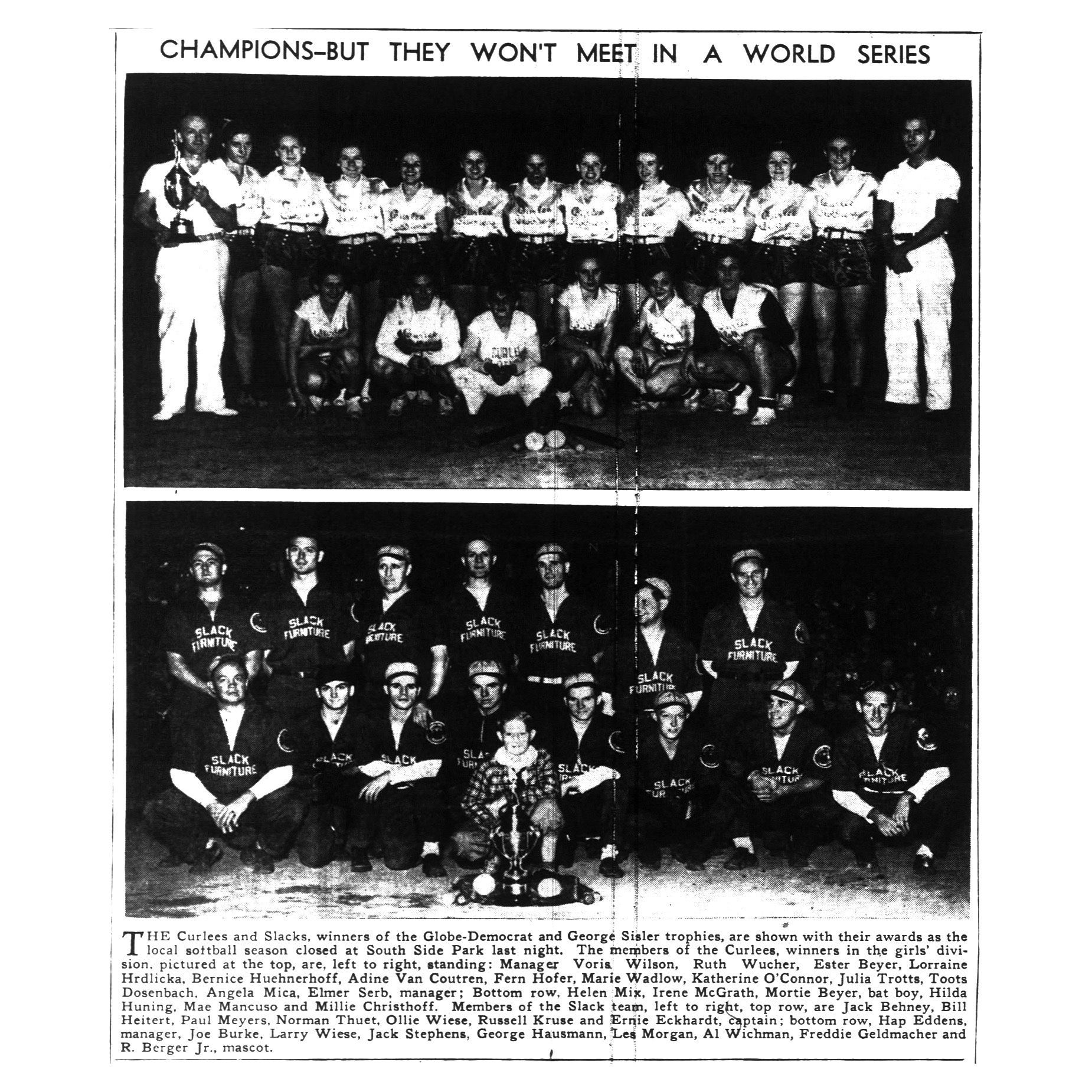
1936 — Curlee Clothiers defeated Rice-Stix Girls
1937 — Rice-Stix Girls defeated Grandma’s Cakes
1938 — Curlee Clothiers defeated Topmost Fashions
1939 — Curlee Clothiers defeated Melber Bakery
1940 — Curlee Clothiers defeated Tomboy Stores
1941 — Tomboy Stores defeated Roth’s Rangers
1942 — Roth’s Rangers defeated Breimeyers
1943 — Weick Undertakers defeated Hollywood Candy
1944 — Kutis Undertakers defeated Weick Undertakers
1945 — Kutis Undertakers defeated Hi Clay Sign Studios
1946 — Kutis Undertakers defeated Woltman Jewelers
1947 — Hi Clay Sign Studios defeated C. Hoffmeister
1948 — Zenthoefer Girls defeated Dowds
1949 — Kutis Undertakers defeated C. Hoffmeister
1950 — Wilmington defeated Alton, IL (championship status needs further verification)
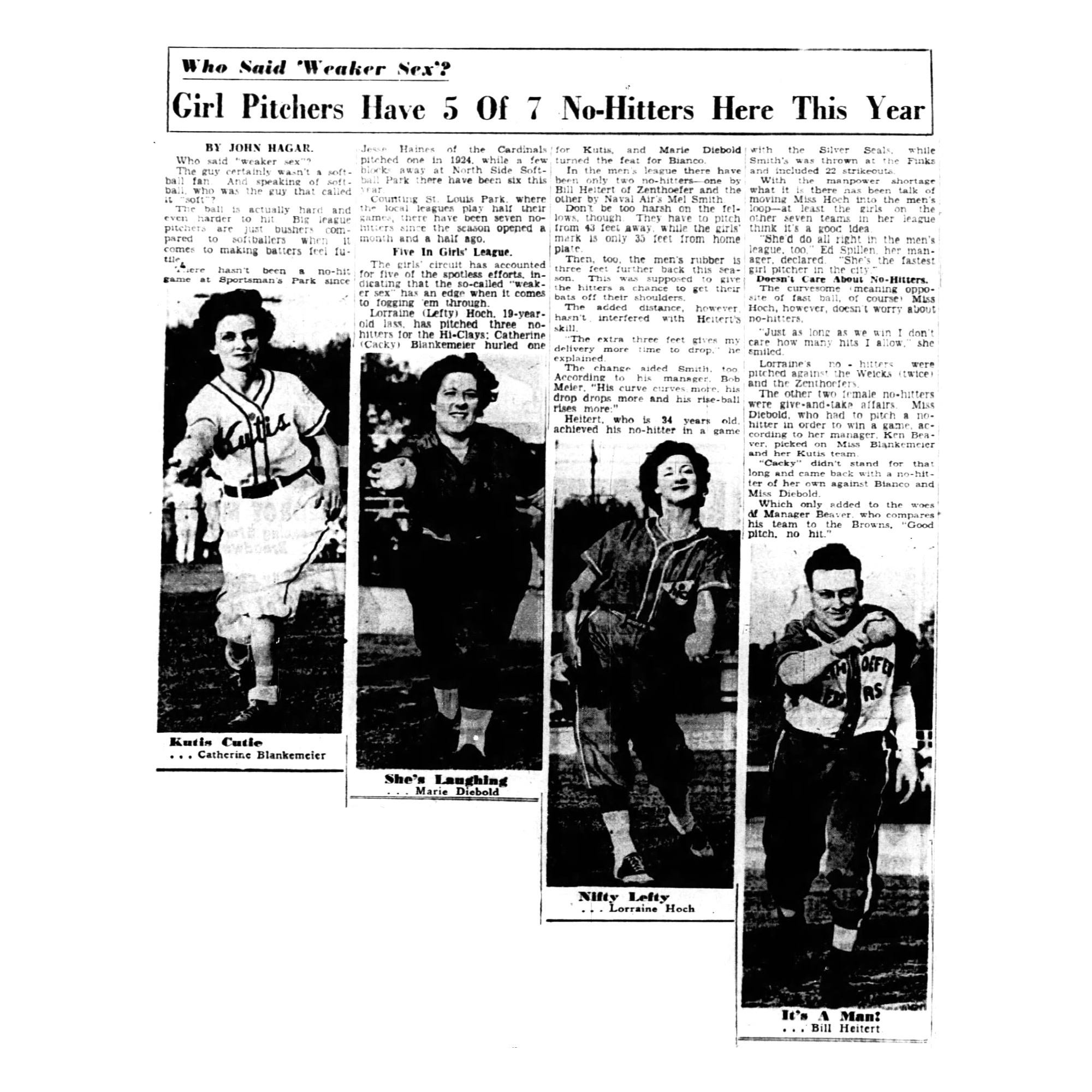
The ASBA also featured some of the top women’s softball players of its era. Among its standout stars were pitchers Marie Wadlow and Lorraine “Lefty” Hoch, both of whom later went on to play professionally. Wadlow continued her career in both the All-American Girls Professional Baseball League (AAGPBL) and the National Girls Baseball League (NGBL), while Hoch went on to star in the NGBL. Their careers highlight the important role the ASBA played in developing talent and providing a pathway to professional softball.
After 1948, the history of the ASBA becomes a little muddy. Mentions of the American Soft Ball Association in the St. Louis Globe-Democrat disappear after 1948, but the women’s softball teams that had competed in the ASBA continued playing at the same American Association ballparks, including North Side Park, in 1949. The Kutis Undertakers were crowned city champions that season, but it is unclear whether the championship was still conducted under the ASBA or a different organization.
In 1950, another women’s club was crowned city champion as Wilmington defeated Alton, Illinois. The fact that a St. Louis team defeated an out-of-town opponent suggests this may have been an ASBA tournament, but there was no mention of the organization or any of its other familiar hallmarks, such as the championship trophy or George Sisler himself.
References to the “American Softball Association” begin appearing again after that, but I believe the newspaper was actually referring to the Amateur Softball Association (ASA) and simply printed the wrong name.
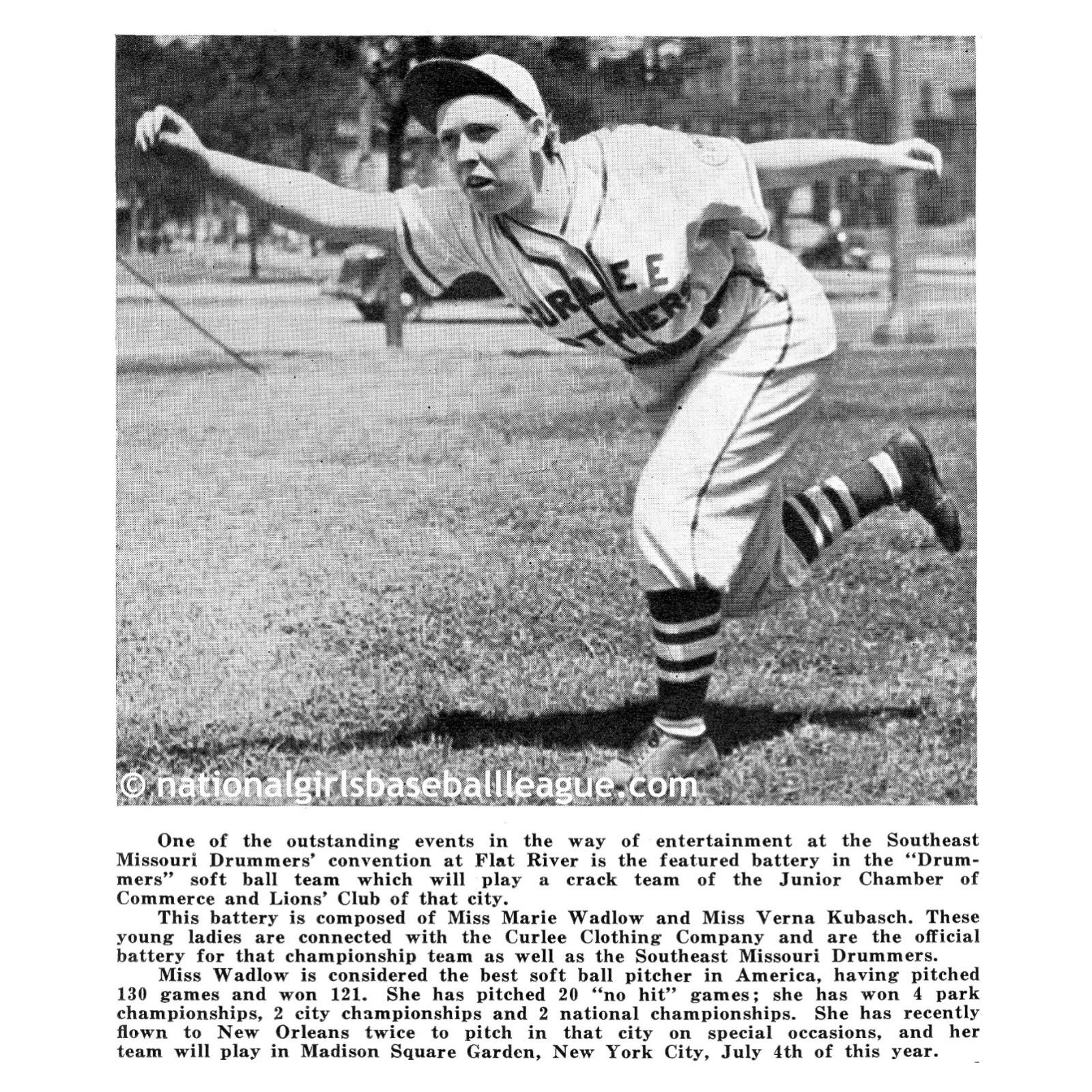
Although the final chapter of the ASBA remains difficult to trace, its legacy lives on. For more than a decade, the organization helped make St. Louis a center of women’s softball, drawing large crowds and creating opportunities for female athletes to compete at a high level.
St. Louis would later become home to the St. Louis Hummers of the International Women’s Professional Softball Association (IWPSA) in the late 1970s. As the St. Louis Gateway Gold look to bring professional softball back to the Gateway to the West, they would be continuing the city’s rich softball tradition. The ASBA remains one of the many forgotten chapters that helped build women’s softball in North America.
If you have photographs, programs, newspaper clippings, or other information related to the American Soft Ball Association, I’d love to hear from you. The ASBA’s later history remains difficult to document, and any additional information could help preserve this overlooked chapter of women’s softball history.