

Some of you have heard me talk about several different leagues outside of the National Girls Baseball League on my website and social media accounts, so I wanted to provide some context for why I believe they are important. What follows is a brief overview of what I consider the Golden Age of women’s baseball and softball, a period that began with the creation of the Amateur Softball Association in 1933 and ended with the collapse of the major professional women’s leagues by 1955.
Governing the Game
The Amateur Softball Association (ASA), based in Chicago, was formed in the fall of 1933 following the success of a softball tournament held at the 1933 World’s Fair. Prior to its creation, women’s softball was played widely across the United States, but rules varied from city to city. The ASA established a national governing body that standardized rules and organized competition at both the local and national levels.
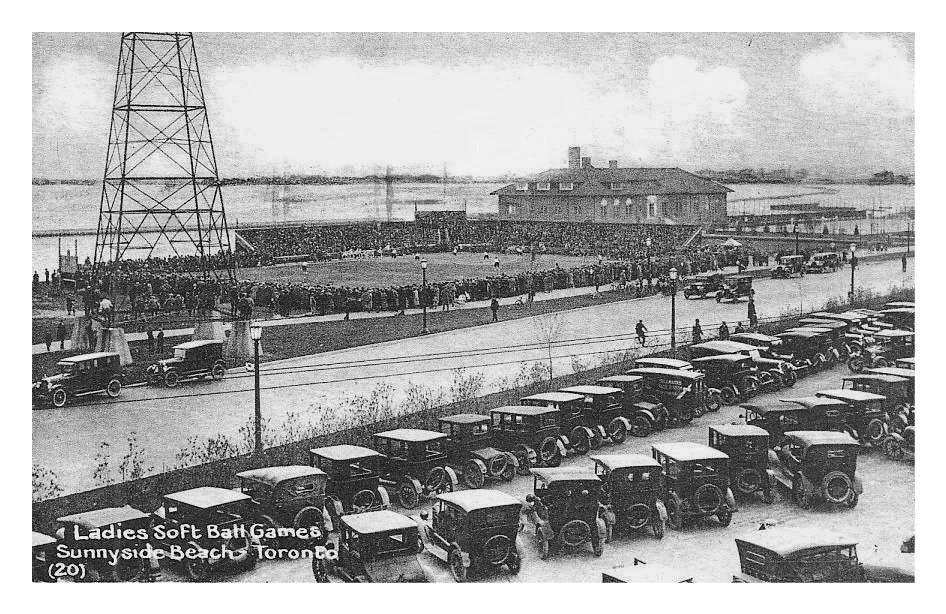
A rival organization, the American Soft Ball Association (ASBA), was also formed in 1933 in St. Louis by former Major League Baseball star George Sisler. While it served a similar purpose, it never matched the reach of the ASA. The ASBA did, however, maintain a strong presence in St. Louis and operated a successful women’s circuit at Loyola Stadium in Los Angeles.
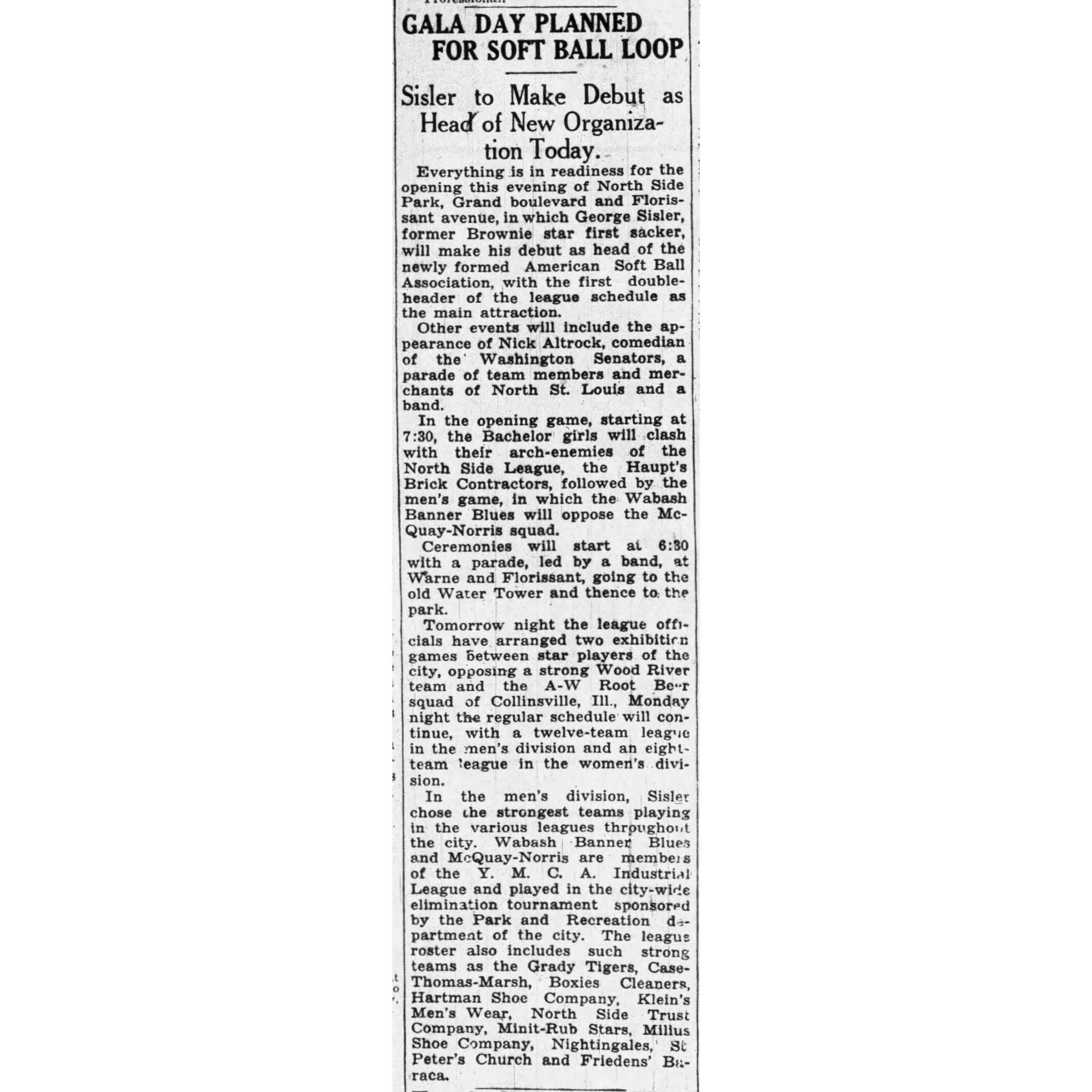
The ASA soon absorbed many established leagues, and its World Amateur Softball Tournament became the premier prize in the sport. Among the most notable member leagues was Toronto’s Olympic Ladies’ Softball League. The league, founded in 1926 and played at Sunnyside Stadium along Lake Ontario’s waterfront, drew large crowds and widespread media coverage. Its teams featured many of the sport’s top players and consistently performed well at the World Tournament.
Other prominent leagues, such as Chicago’s Metropolitan League (1935–1945) and Northwest Girls’ Softball (1945), emerged after the ASA’s formation, often with the specific goal of strengthening teams for national competition.
The ASA also enforced strict amateurism rules, prohibiting players from receiving pay.
The National Softball Congress (NSC), formed in 1947, grew in part out of tensions with the ASA. Its origins can be traced to the suspension of several prominent teams—including the powerhouse Jax Brewery Maids of New Orleans—for participating in “paid” games. In contrast to the ASA’s rules prohibiting player compensation, the NSC allowed greater flexibility, including permitting teams to share in gate receipts from its national tournament in Phoenix. The organization sponsored women’s competition through 1954, after which it transitioned into what is now the men’s-only International Softball Congress.
Of the three governing bodies that shaped the women’s game during this period, only the Amateur Softball Association survives today. Now operating as USA Softball, its primary focus is on national teams and international competition.
The Professional Leagues
It was within this structure, defined by competing governing bodies and conflicting ideas about amateurism, that a number of women’s professional leagues emerged during the 1940s.
When the All-American Girls Professional Baseball League (AAGPBL) was established in 1943, it was, in fact, a women’s softball league known as the All-American Girls Softball League. Chicago Cubs and Pacific Coast League Los Angeles Angels owner William Wrigley, concerned that Major League Baseball might be forced to shut down due to the depletion of players during World War II, saw women’s softball, already popular in both cities, as a way to keep the sport alive. Beginning in 1944, the league gradually modified its rules, moving closer to baseball until it fully resembled the traditional game by its final season in 1954.
The opportunity to play professionally drew many of the top players in the country, leaving a noticeable void on some of the strongest amateur teams. No city felt that impact more than Chicago, where leading clubs saw their rosters depleted as players turned professional. At the same time, many of the city’s established softball leaders were frustrated at being excluded from the formation of the new league.
In response, they organized their own circuit in 1944: the National Girls Baseball League (originally the National Girls Softball League). Despite its name, the circuit was a women’s professional fastpitch softball league. The shift to “baseball” terminology was partly a way to distinguish it from Chicago’s 16-inch men’s softball leagues, particularly the Windy City League, which played in the same ballparks, and to signal to fans that the women’s game followed rules much closer to baseball, aside from the larger ball and underhand pitching. Over the next eleven seasons, the NGBL both competed with the AAGPBL for players and attention and, at times, cooperated with it, helping organize winter leagues (including the Miami metropolitan area–based International Girls Baseball League of 1952–1953) and even exploring a potential merger for the 1954 season.
In 1945, another major women’s league emerged in the New York metropolitan area. The American Girls Softball League (AGSL) was formed by leading clubs from New York City, Long Island, and New Jersey. In 1949, the league transitioned to a modified version of baseball and was reorganized as the American Girls Baseball Conference (AGBC).
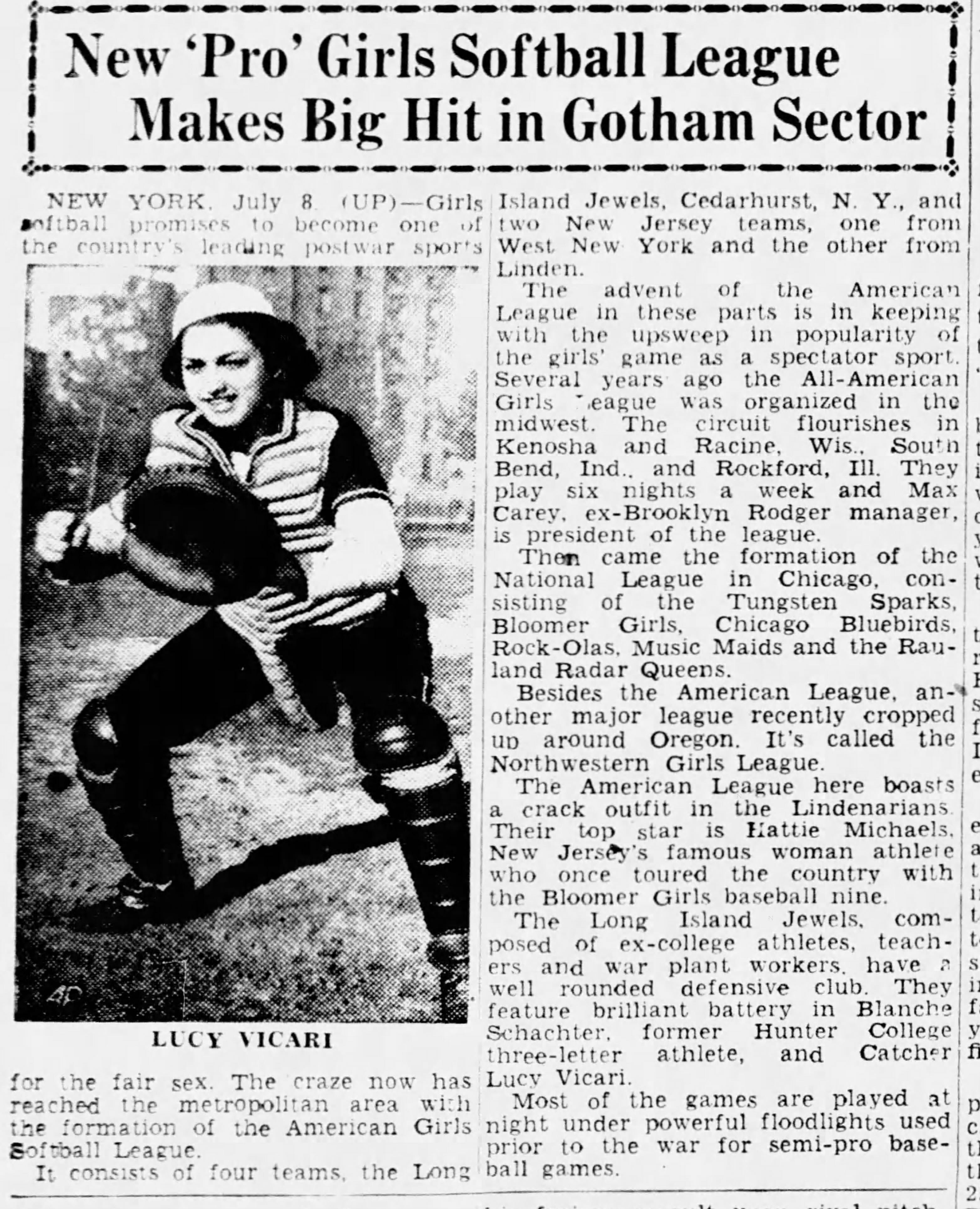
The circuit stood out from its contemporaries in several ways. It was integrated from the outset, with multiple Black women signed throughout its existence, and initially operated under the Amateur Softball Association (ASA) before switching to the National Softball Congress (NSC) in 1948. After switching to the NSC, the league featured a mix of professional, semi-professional, and amateur teams. Once the league transitioned to baseball, it was no longer affiliated with any softball governing bodies, although some clubs continued to sponsor amateur softball teams on the side.
The AGSL/AGBC began to decline after the 1952 season, when many of its top teams folded. It continued briefly as the Eastern States Girls Baseball League (ESGBL) before ultimately collapsing after the 1954 season, alongside both the AAGPBL and the NGBL. Due to its longevity and the high caliber of play, it should be considered a major league alongside those circuits.
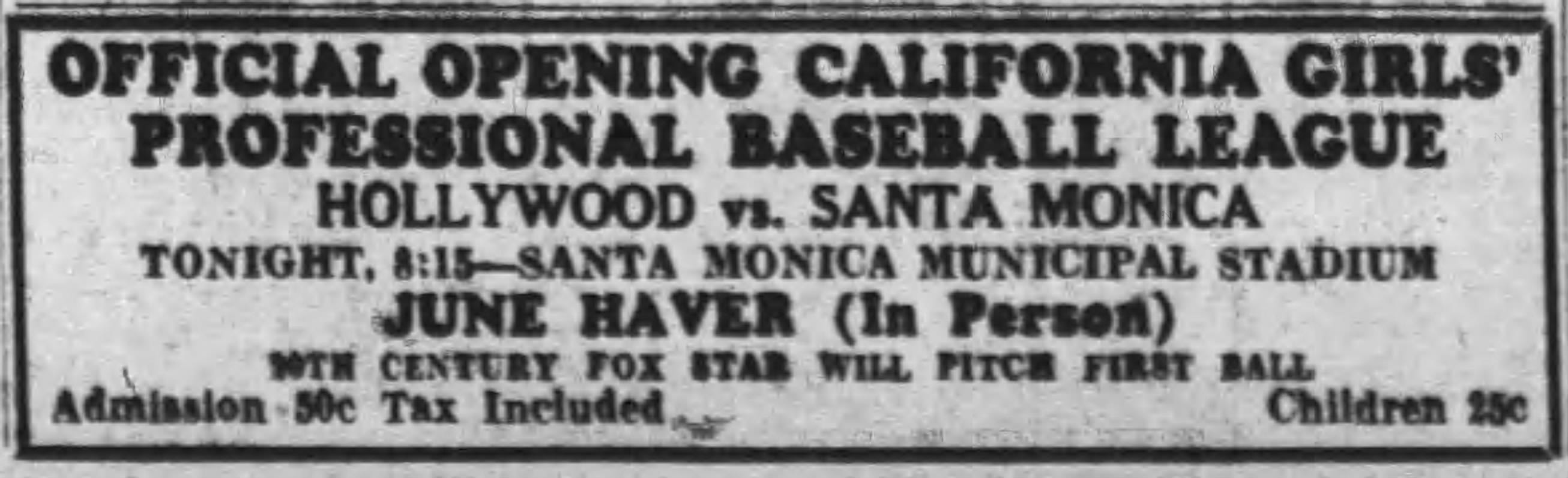
In 1946, a short-lived but notable effort emerged on the West Coast. The California Girl’s Professional Baseball League (CGPBL) was established in the Los Angeles area by longtime promoter Marty Fiedler. A central figure in Southern California women’s softball during the late 1930s and early 1940s, Fiedler had previously operated successful leagues before suspending operations in 1941 to join the Navy. Upon his return, he attempted to revive that success through a new professional circuit, but the league failed to gain traction and lasted only a single season. Like the National Girls Baseball League, the CGPBL was baseball in name only, as it was actually played under women’s fastpitch softball rules.
Taken together, these leagues and organizations formed a complex and highly competitive landscape for women’s baseball and softball during the mid-twentieth century. Far from existing in isolation, they were interconnected, sharing players, competing for talent, and, at times, working together to sustain the sport at the highest levels.
What emerged between the 1930s and mid-1950s was not a single league, but an entire system, one that offered opportunities for women to play at amateur, semi-professional, and professional levels across the United States and Canada. Understanding this broader landscape is essential to fully appreciating the place of leagues like the National Girls Baseball League within the history of the game.